Health and Safety Policy for Kensington Cleaner
 Kensington Cleaner is committed to maintaining a safe, healthy, and well-organised working environment for every cleaner, supervisor, client, and visitor involved in our services. This health and safety policy sets out the principles and practices that guide our day-to-day operations, with a focus on preventing injury, reducing risk, and promoting responsible working habits. We believe that safe cleaning services depend on clear procedures, proper training, suitable equipment, and consistent attention to detail.
Our approach applies to all cleaning tasks, including routine domestic cleaning, deep cleaning, communal area maintenance, and specialist surface care. Every job must be planned with safety in mind, from the selection of products to the movement of equipment and the handling of waste. Risk awareness is essential in every setting, and all team members are expected to stop and assess hazards before starting work.
To support this, the company uses a structured process for identifying hazards, evaluating risks, and applying control measures. Common risks may include slipping on wet floors, exposure to cleaning chemicals, repetitive strain, manual handling injuries, and contact with sharp or broken items. 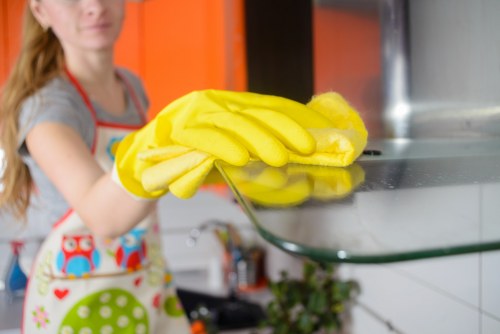 Each cleaner is trained to recognise these hazards and act in a way that protects themselves and others. No task should be rushed if doing so would create an unsafe condition.
Training and supervision are central to our policy. New staff receive instruction on safe working methods, correct product use, personal protective equipment, emergency procedures, and equipment handling. Ongoing supervision helps ensure that standards remain high and that safe routines are followed consistently. When tasks change or new equipment is introduced, refresher instruction is provided so that the cleaning team remains confident and competent.
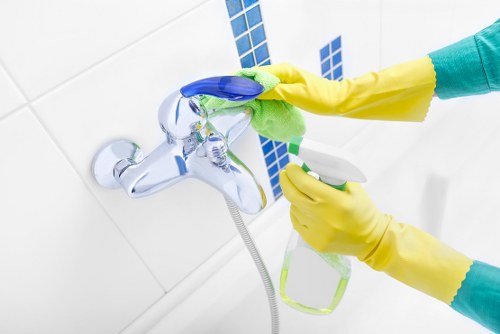 We require all cleaners to use appropriate protective measures wherever needed. This may include gloves, slip-resistant footwear, face coverings, aprons, or eye protection depending on the job and the materials being used. Protective equipment must be suitable for the task, kept in good condition, and worn correctly. If equipment is damaged or no longer effective, it should be replaced immediately. The use of personal protective equipment is a vital part of preventing avoidable harm.
Cleaning products must be stored, labelled, and used responsibly. Only approved products should be brought onto site, and instructions on dilution, ventilation, and surface compatibility must be followed carefully. Chemicals should never be mixed unless the product guidance explicitly allows it. Spills must be contained and cleaned promptly, while containers should always be secured after use. Good chemical safety reduces the chance of accidental exposure and helps preserve a safe environment for everyone present.
We place strong emphasis on safe manual handling. Lifting, carrying, bending, and reaching are common parts of cleaning work, so staff are expected to use proper posture, avoid unnecessary strain, and request assistance when an item is too heavy or awkward. Trolleys, carts, and other aids should be used wherever possible. In addition, floors must be left safe and tidy during the work process to reduce trip hazards.  By following these habits, Kensington cleaner services can operate efficiently while minimising physical risk.
Equipment safety is equally important. Machines, vacuums, mops, extension tools, and other devices should be checked before use and kept in suitable working order. Faulty items must be removed from service until repaired or replaced. Cables should be positioned carefully to avoid tripping, and electrical equipment must never be used with wet hands or in a manner that creates an unsafe condition. A careful equipment inspection routine is one of the simplest ways to prevent incidents.
All staff are expected to maintain a high standard of housekeeping. Work areas should remain organised, with clutter removed, waste disposed of properly, and pathways kept clear. Where cleaning is carried out in occupied spaces, clear communication is required so that other people are aware of wet floors, restricted access, or temporary hazards. Signage, barriers, or verbal warnings may be used where appropriate. This practical approach supports a safer and more professional cleaning service.
Emergency readiness is also part of our policy. Staff must know how to respond to accidents, spills, cuts, slips, exposure to chemicals, and other unexpected events. First aid supplies should be available where required, and incidents should be reported as soon as possible so that corrective action can be taken. When a serious hazard is identified, work must pause until the issue has been addressed. Prompt reporting helps prevent repeat incidents and supports continuous improvement.
 We expect all members of the team to take responsibility for their own safety and for the safety of those around them. This includes working within their training, using equipment correctly, following instructions, and raising concerns whenever conditions appear unsafe. Management is responsible for reviewing procedures, updating controls, and ensuring that the policy remains effective. A strong health and safety culture depends on shared responsibility and active participation.
This policy is reviewed regularly to make sure it stays relevant, practical, and aligned with the needs of the business. As services, methods, and equipment evolve, our safety arrangements will be updated accordingly. The aim is to provide reliable Kensington cleaning services that protect people, property, and reputation through careful planning and responsible working practices.